Introduction
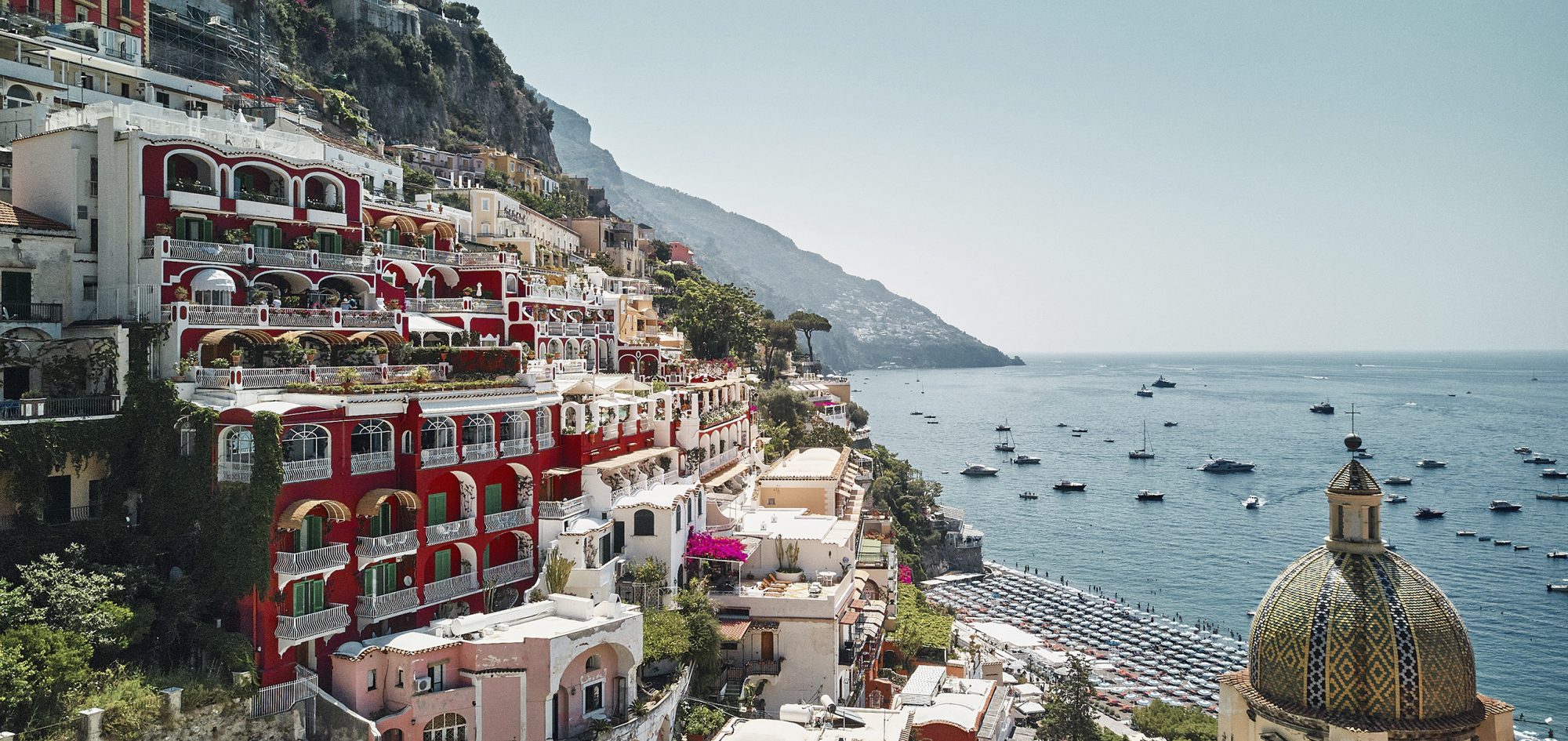
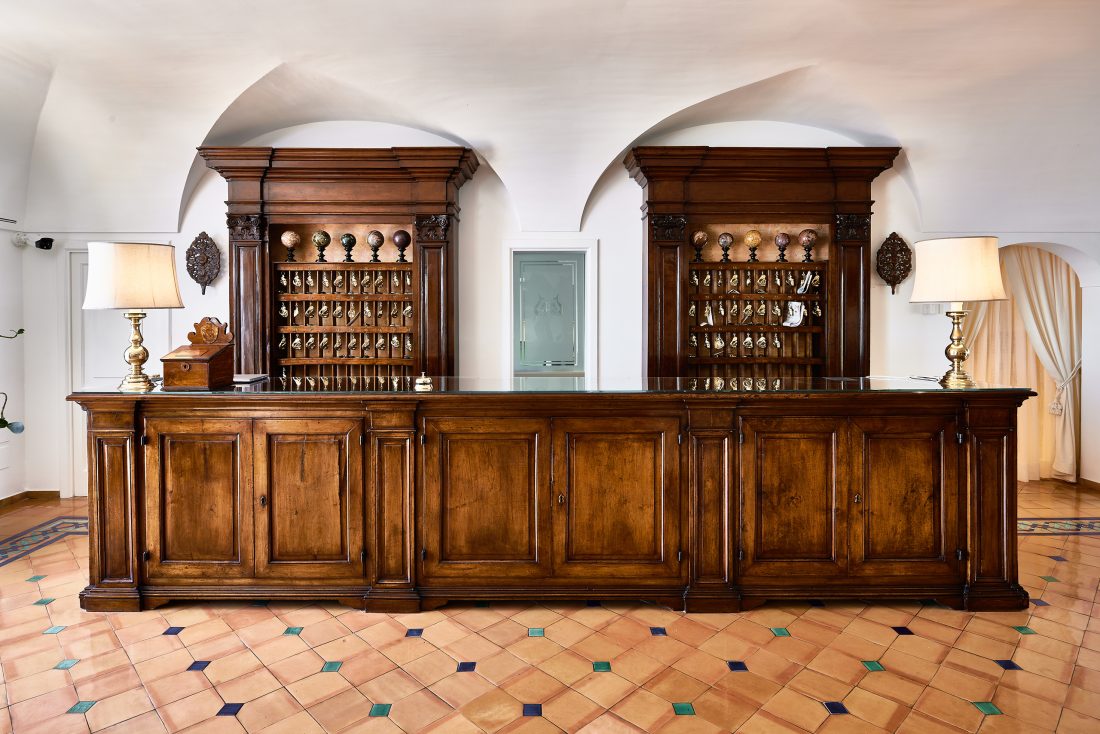
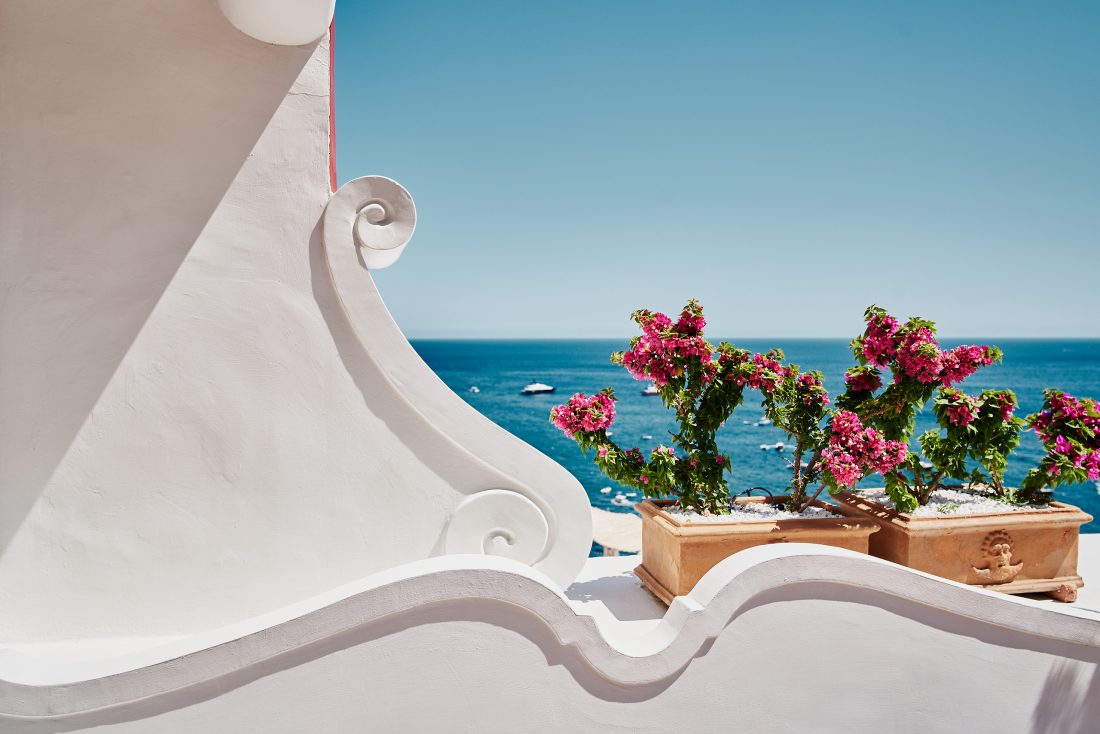
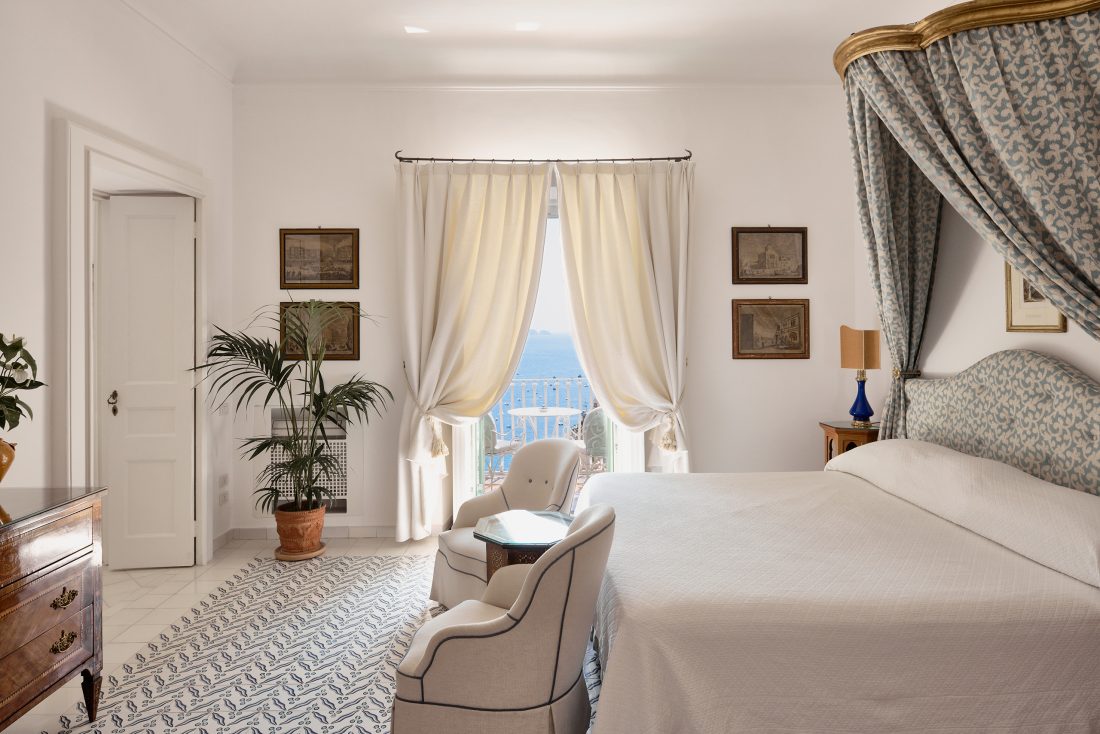
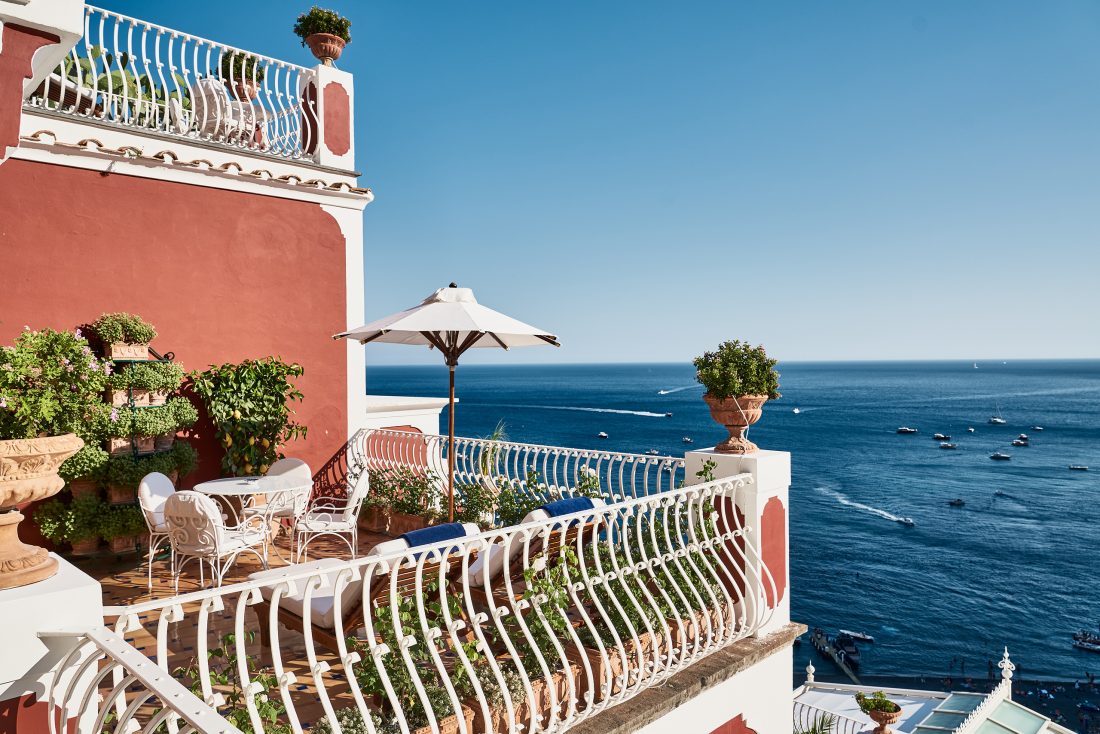
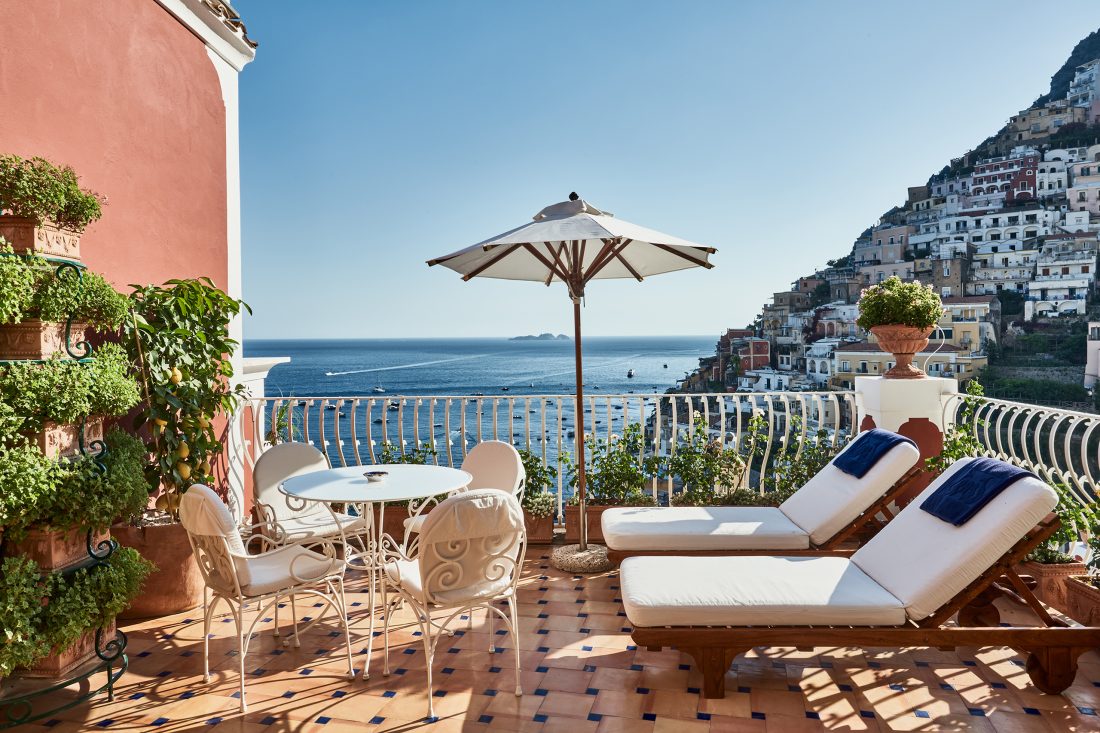
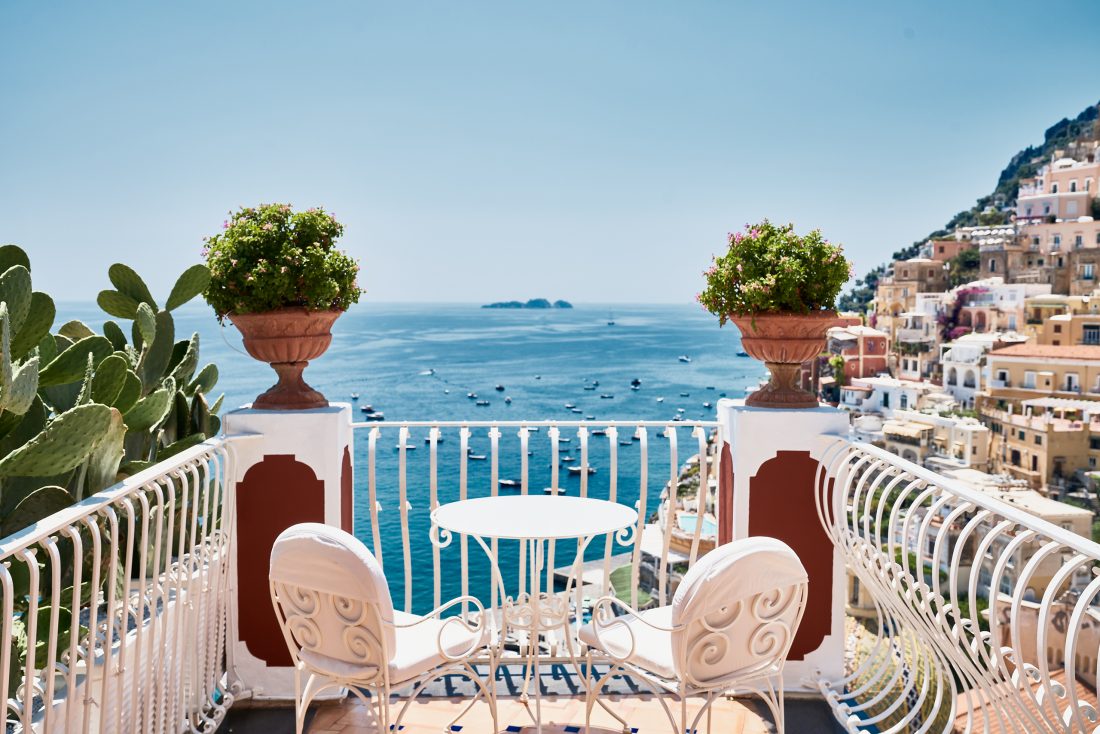
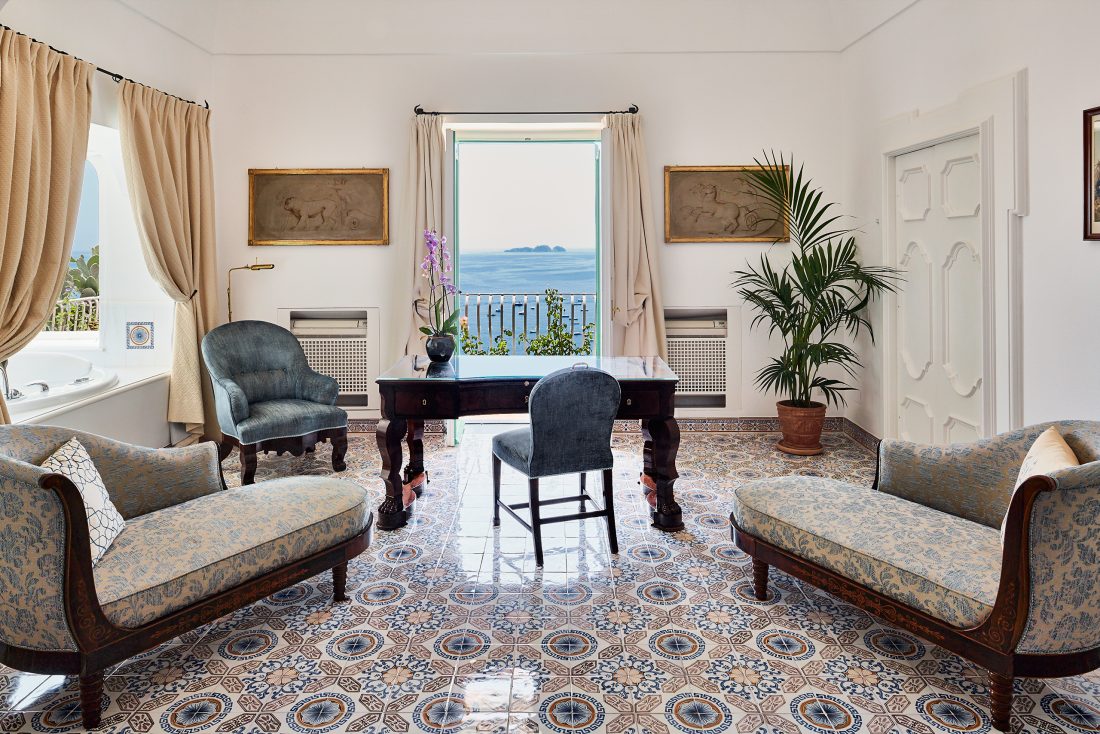
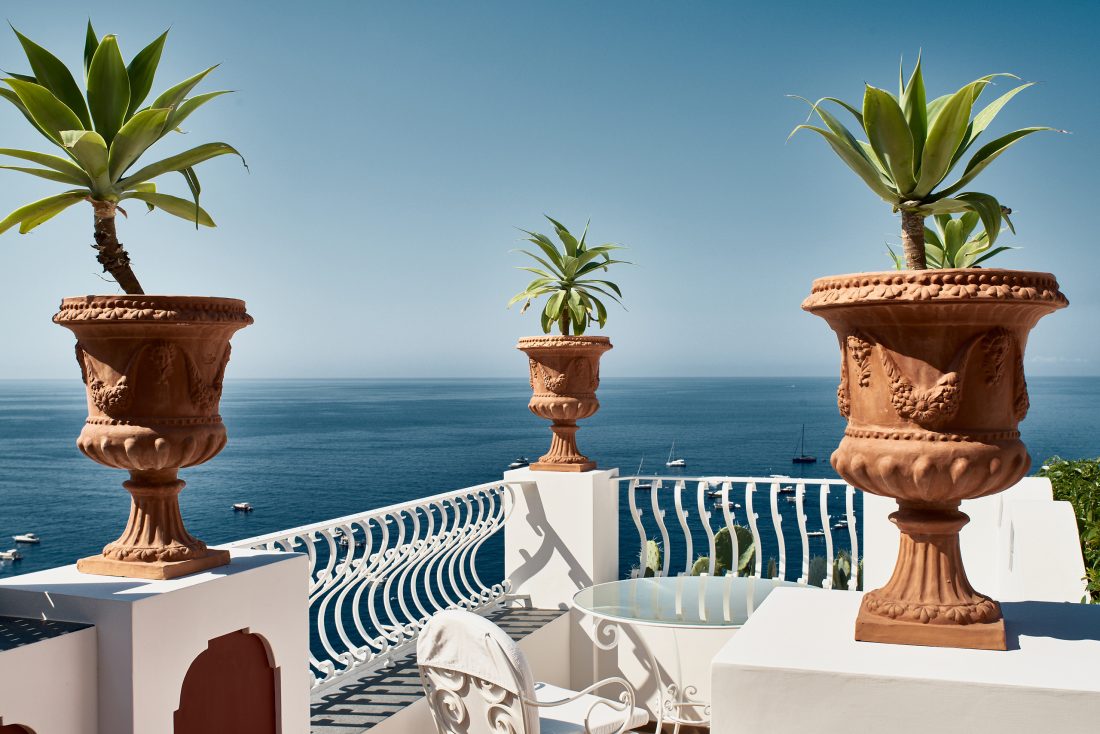
Nestled in the heart of Positano, along Italy’s Amalfi Coast, Le Sirenuse is a legendary, elegant, family owned hotel, where everything feels like a magical escape from ordinary life. With 58 rooms, each individually styled, each with its own story, guests are offered not just a place to stay, but a collection of intimate, elegant worlds. Private terraces or balconies, handcrafted tiles, antiques, vintage furnishings and artwork combine to create a sense of comfort, artistry and deep attention to detail. What sets Le Sirenuse apart is not simply its facilities but its identity: a hotel born of family, artistry and love. Owned by the Sersale family, it has grown over decades yet remains grounded in history and craftsmanship: tiles custom-made in Vietri, original antiques, local artisans, bespoke touches and toiletries, created in house. Guests don’t just stay; they are immersed in a place shaped by history, taste and the beauty of the Amalfi Coast.
Today, under the stewardship of the Sersale family, also joined by the next generation, the hotel continues to expand its legacy with ventures such as Emporio Sirenuse, Eau d’Italie, and the Dolce Vitality retreat. With its blend of tradition and innovation, Le Sirenuse remains not only a world-renowned hotel but also a living expression of the Sersale family’s deep connection to Positano.
The Sersale Family
Once the summer villa of the Marchesi Sersale of Naples, Le Sirenuse, then known as Villa Giulietta, was the family’s retreat from the bustle of city life. Overlooking the sea of Positano, it served as a place of rest and renewal, and during the Second World War, the Sersales moved there permanently to escape the bombings in Naples. Although originally Neapolitan, the family had long-standing ties with Positano, with Cardinal Antonino Sersale serving as its archbishop for over two decades in the 18th century. By the mid-20th century, siblings Aldo, Paolo, Franco, and Anna Sersale inherited Villa Giulietta from a cousin and found themselves spending more time in Positano than Naples. Paolo was even elected mayor in 1944, a role he held until 1960, during which time he persuaded the Allied forces to designate Positano as a rest camp, a turning point in the town’s rise as a destination for international tourism.
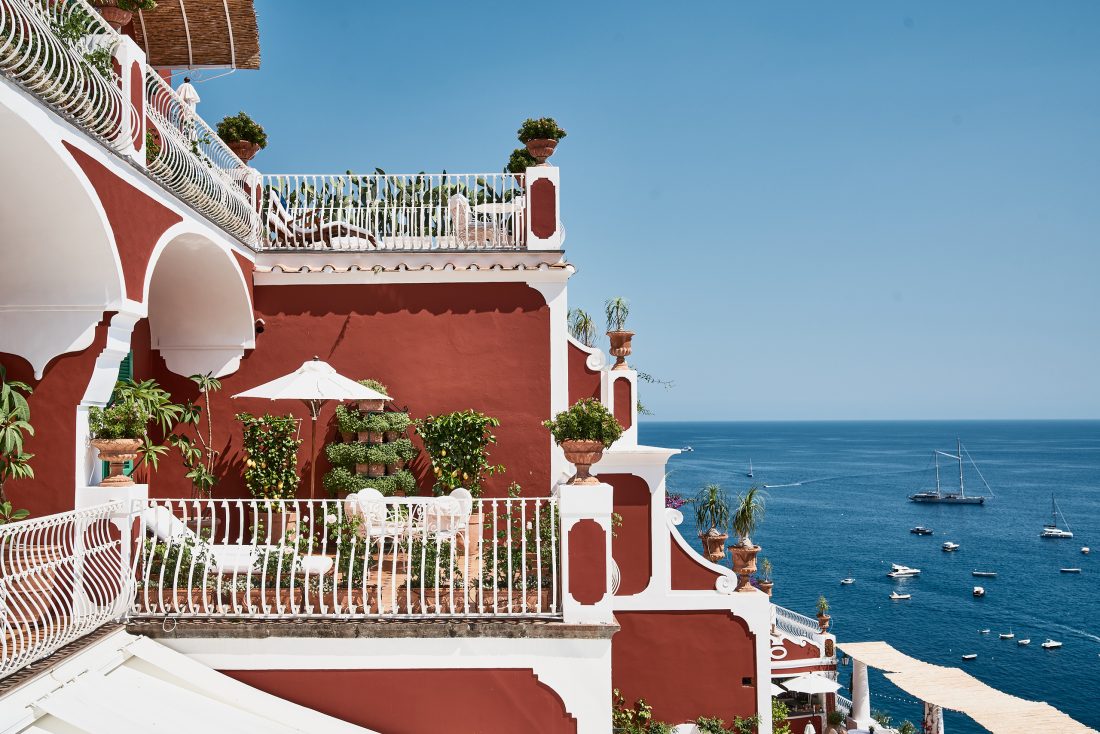
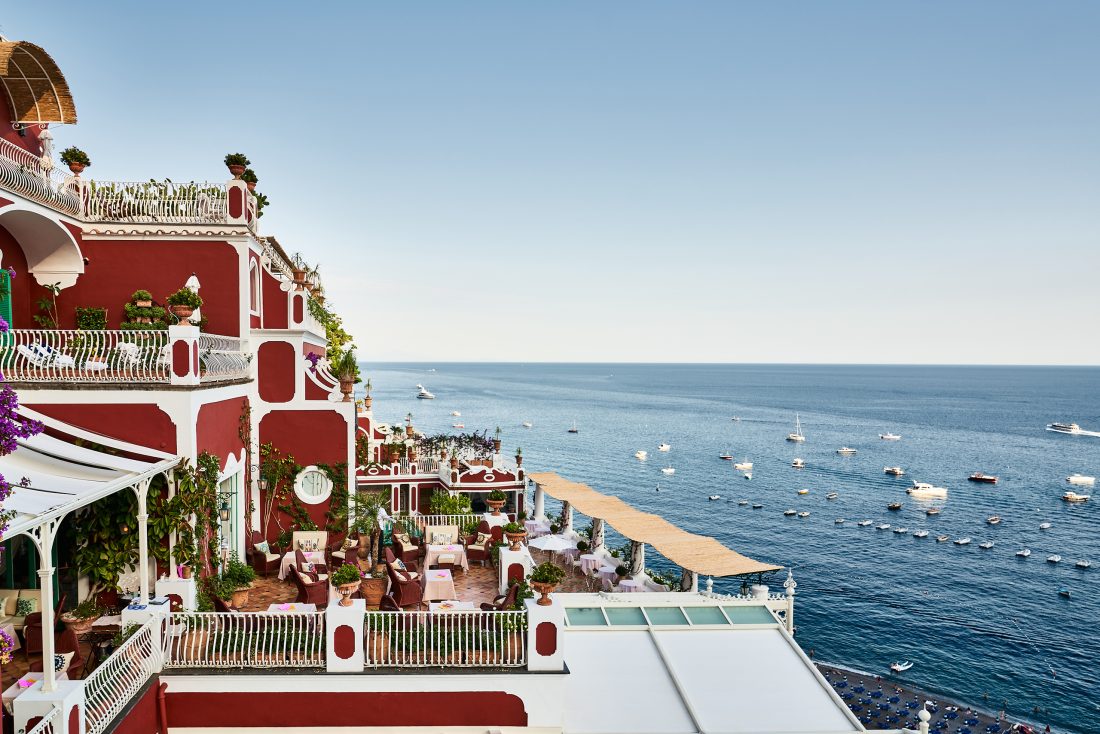
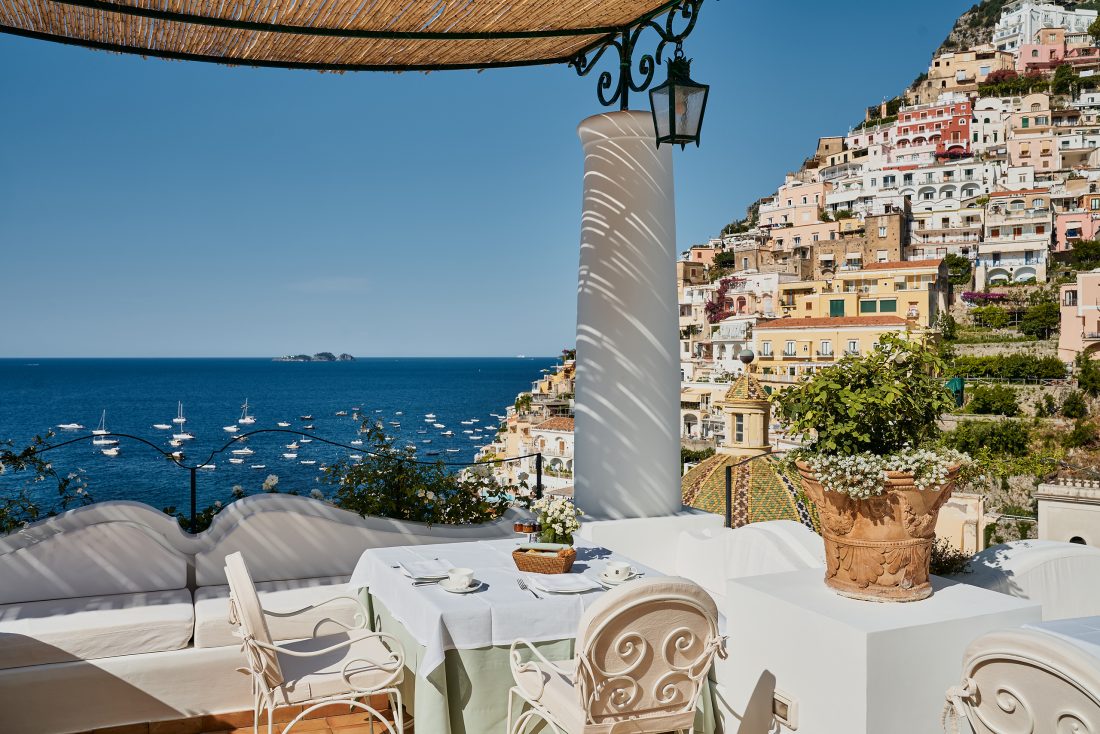
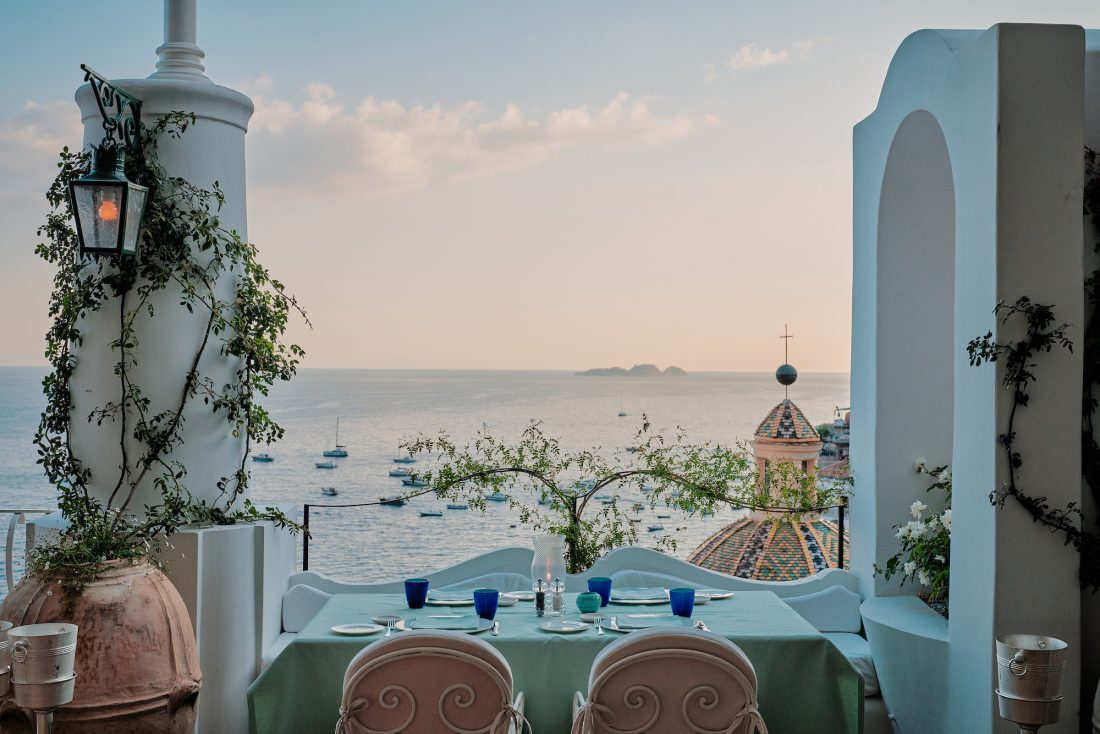
Recognizing the growing influx of visitors, the Sersales decided to transform their summer residence into a hotel. In 1951, they opened Le Sirenuse with just eight rooms and a terrace commanding sweeping views of Li Galli, the Siren Isles, as well as Positano’s cascade of pastel-hued houses and the dome of Santa Maria Assunta. Two years later, the hotel gained international fame when John Steinbeck mentioned it in Harper’s Bazaar, describing it as a “first class hotel, spotless and cool.” What began as a family home extended naturally into hospitality, with the siblings welcoming guests much as they would friends. Over the decades, Le Sirenuse evolved into a 58-suite luxury resort, yet it has never lost the atmosphere of a cultured private home, enriched with family heirlooms, Neapolitan antiques, and artworks that reflect the region’s heritage.
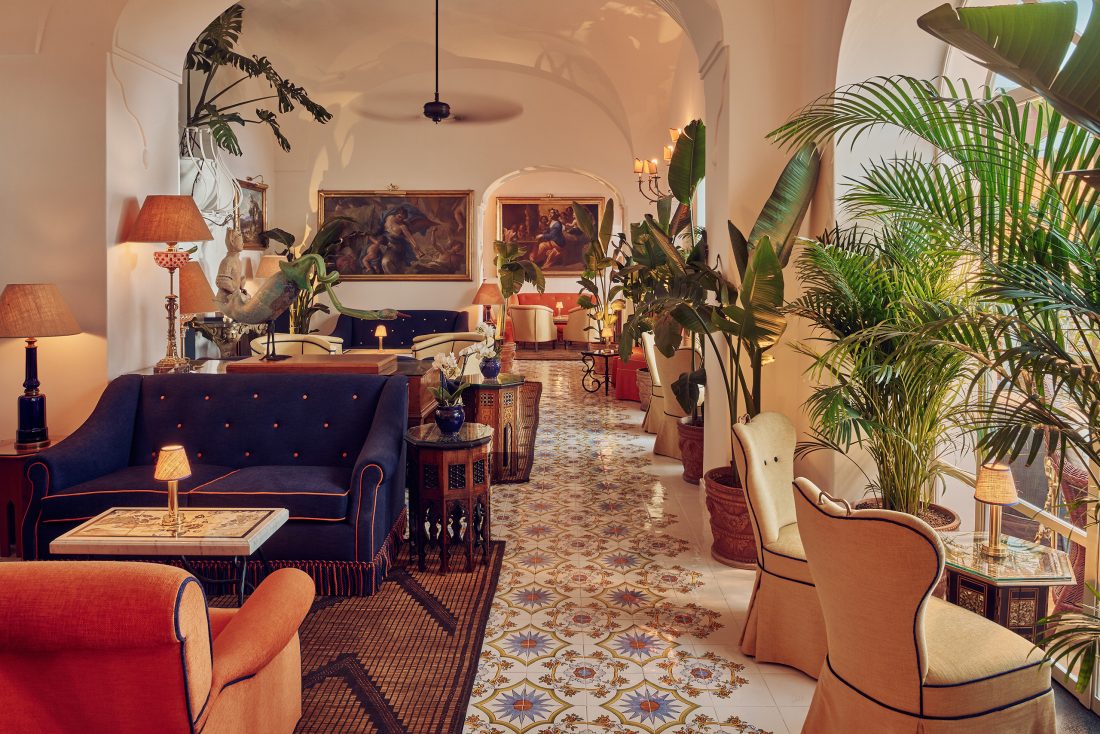
Much of the hotel’s modern identity was shaped by Franco Sersale, who in the 1990s led an ambitious refurbishment project that respected its historic character while enhancing its elegance. His vision integrated European antiques, Neapolitan art, and Moorish elements into a harmonious whole, later complemented by the Artists at Le Sirenuse program.
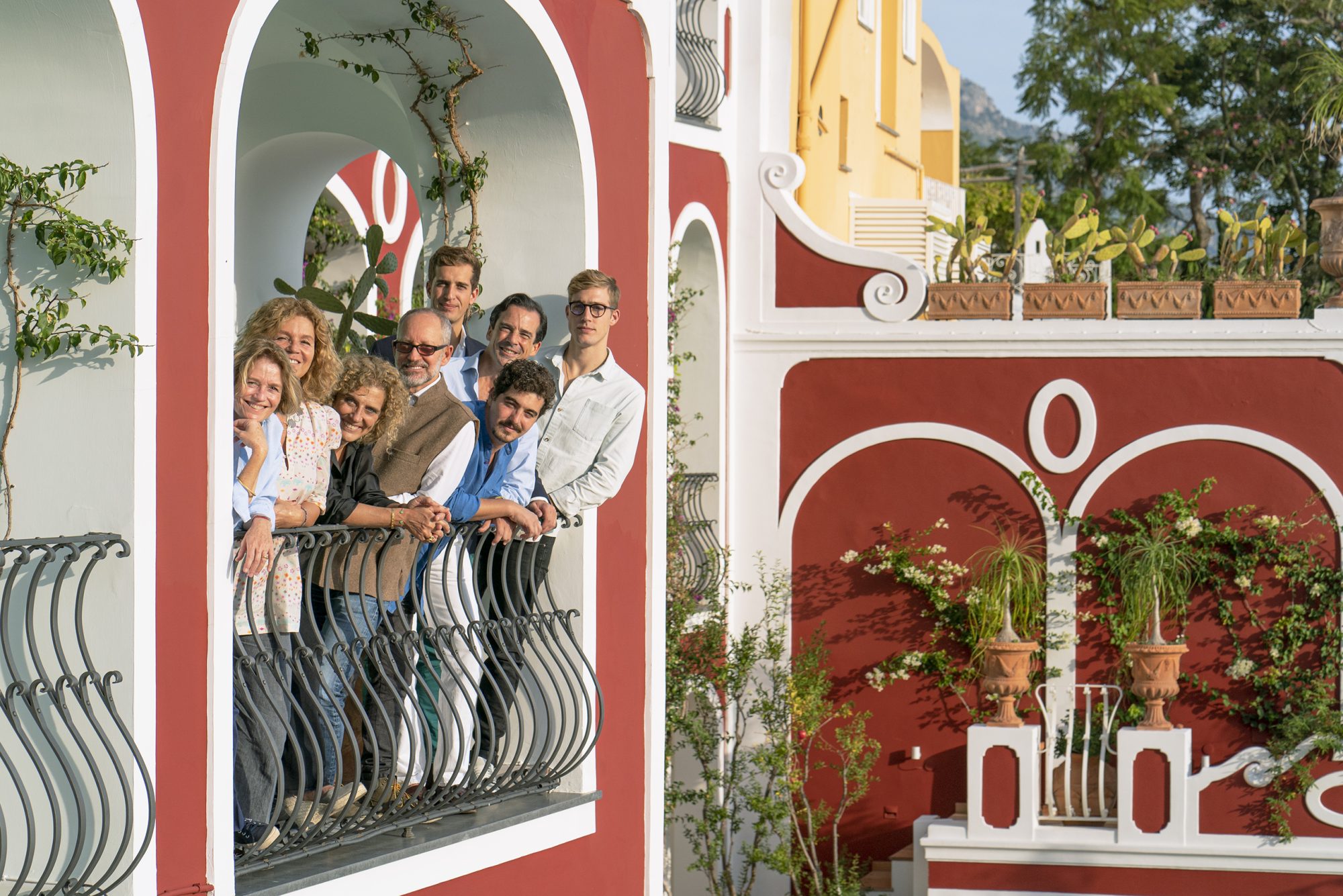
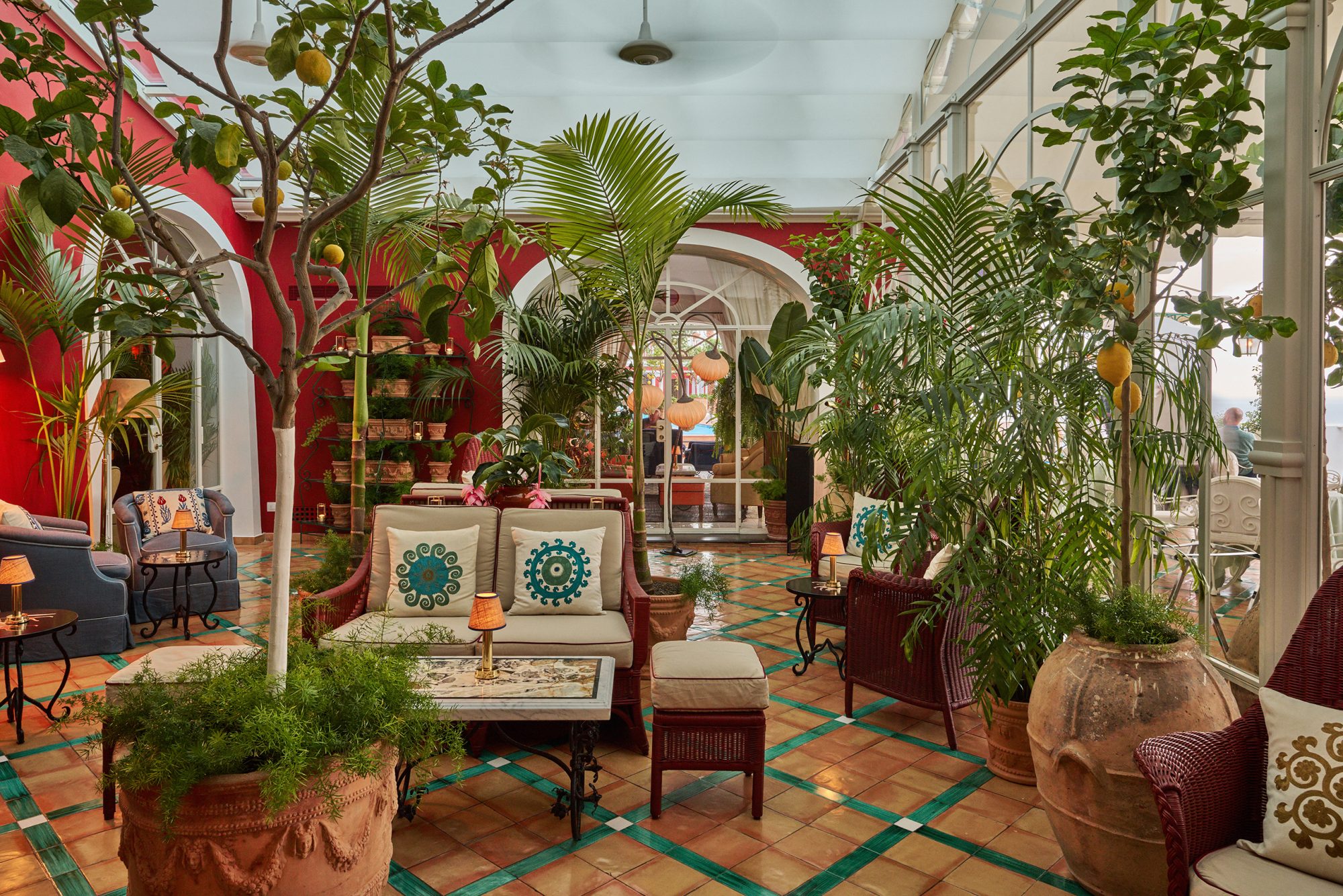
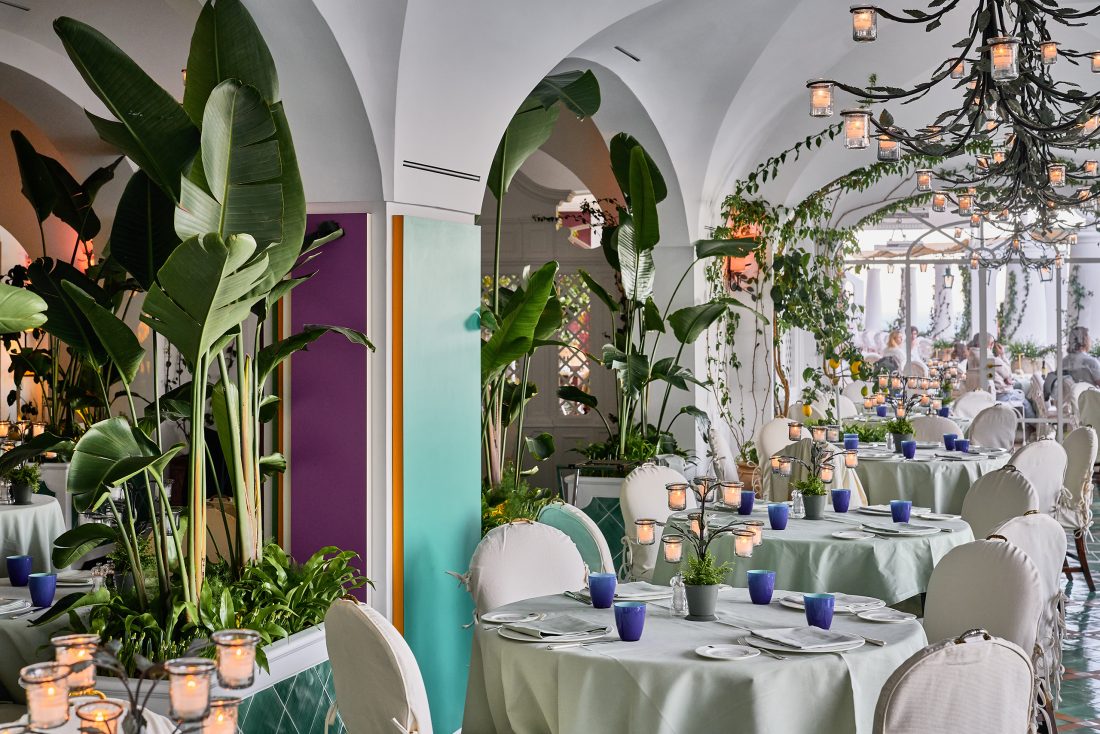
Today Le Sirenuse is directed by Antonio Sersale, Franco’s son, who has been at the helm of the iconic Amalfi Coast hotel since 1992. Antonio’s wife Carla looks after Emporio Sirenuse, the resortwear and lifestyle brand sold via the two Emporio Sirenuse boutiques in Positano, her emporiosirenuse.com website and in leading stores worldwide. The couple’s two children, Aldo and Francesco, joined the family business in 2021, the hotel’s 70th anniversary year. Paolo Sersale’s two daughters are also closely involved with Le Sirenuse: Giulia is responsible for the plants and flowers that embellish the terraces and restaurants, while Marina and her husband Sebastian develop and manage the Eau D’Italie fragrance and skincare range, launched in 2004.
Le Sirenuse’s rooms
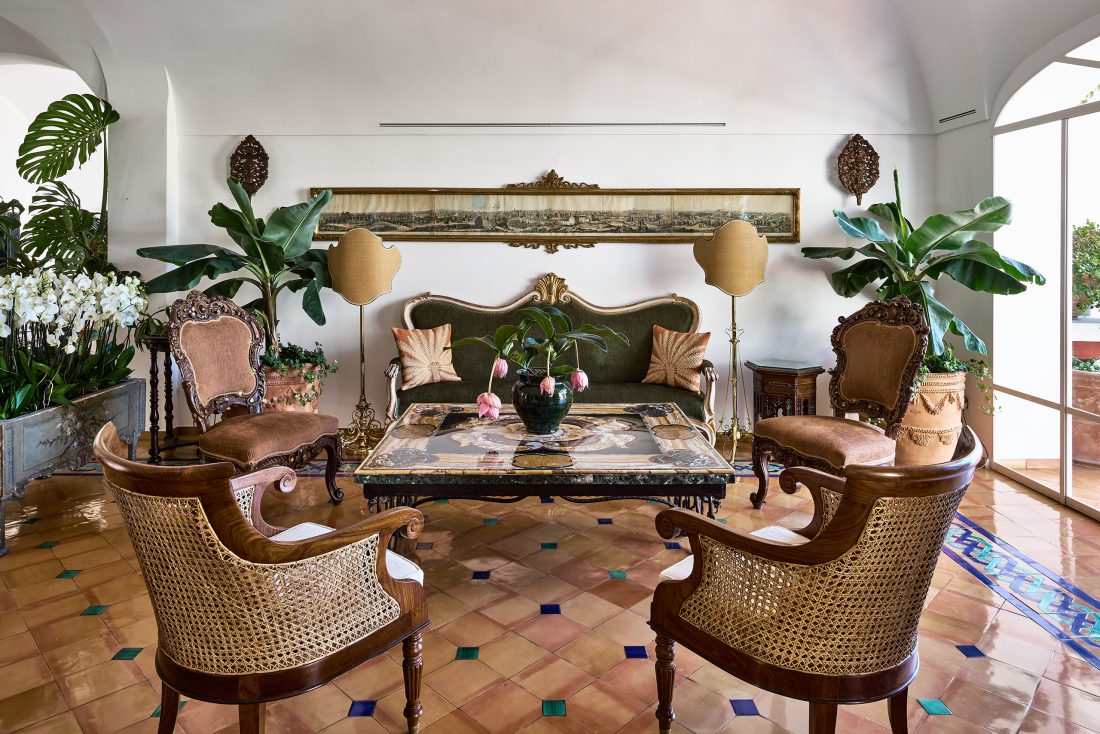
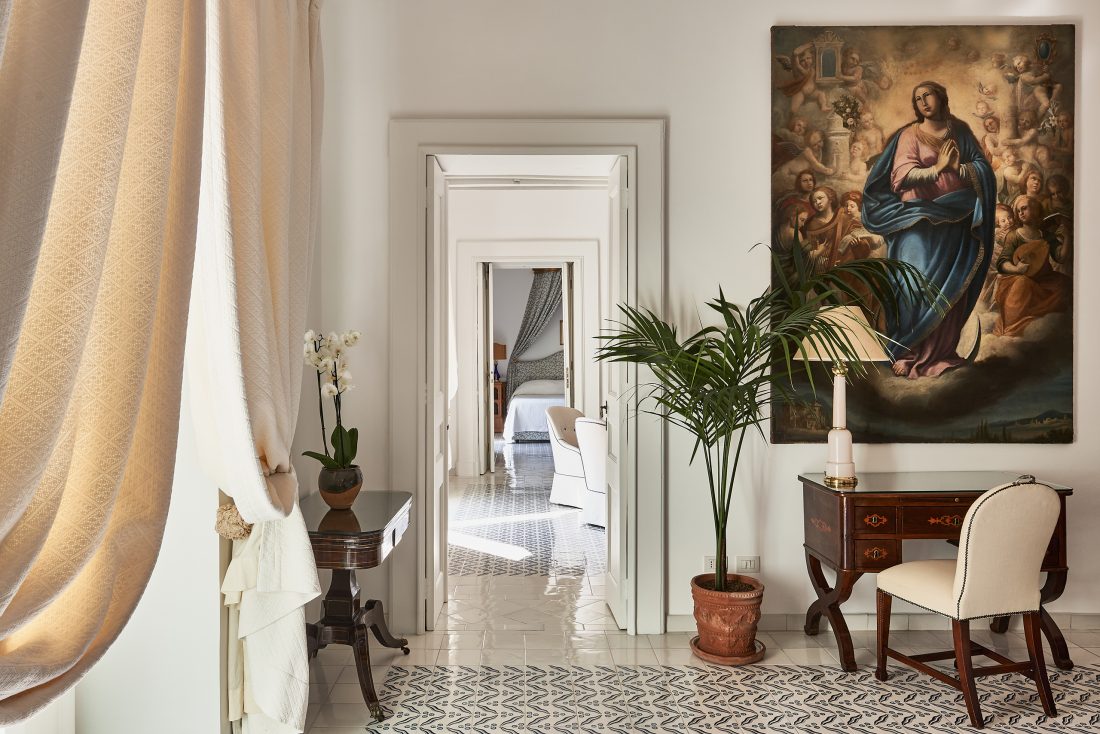
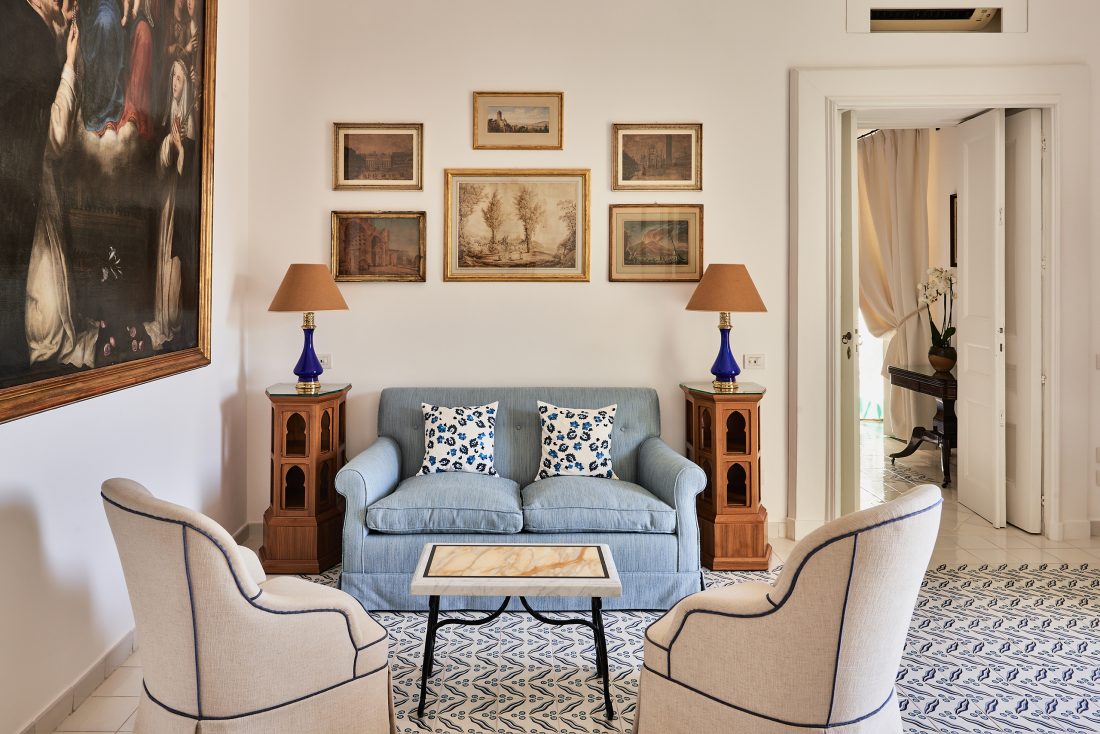
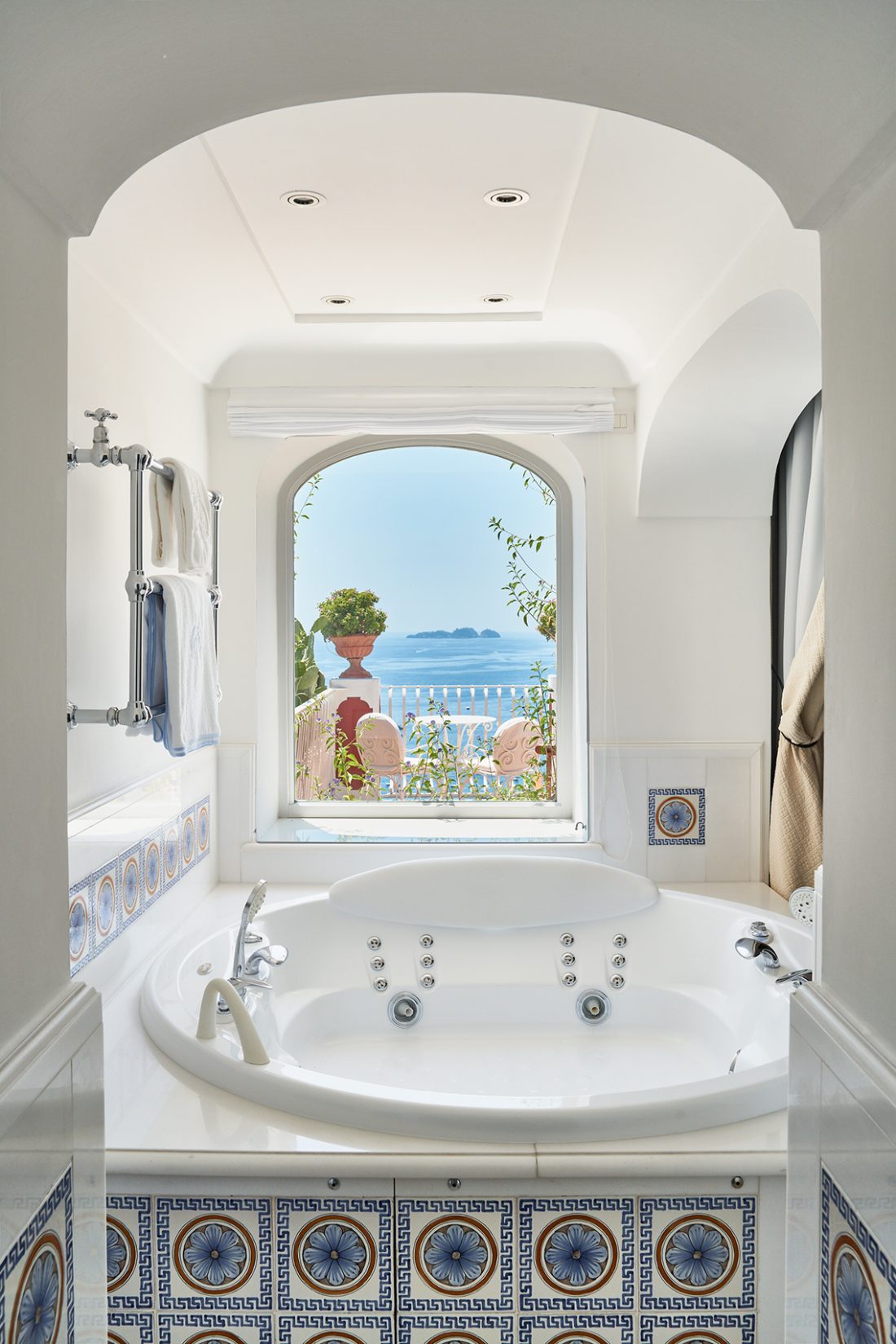
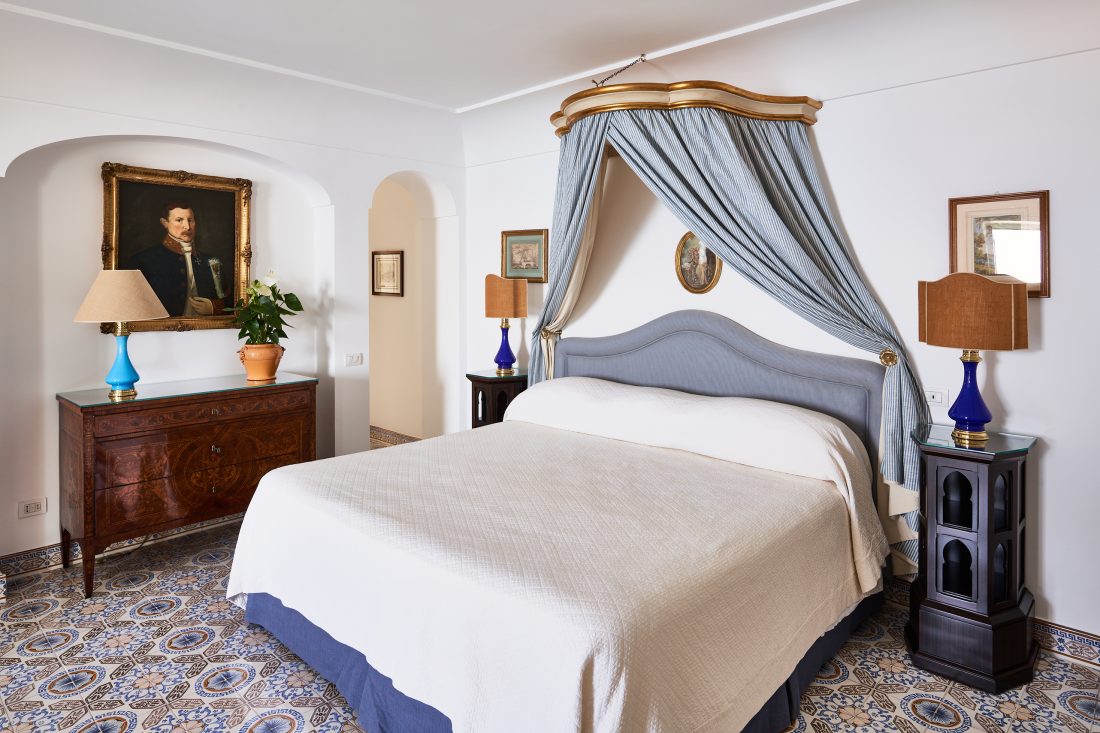
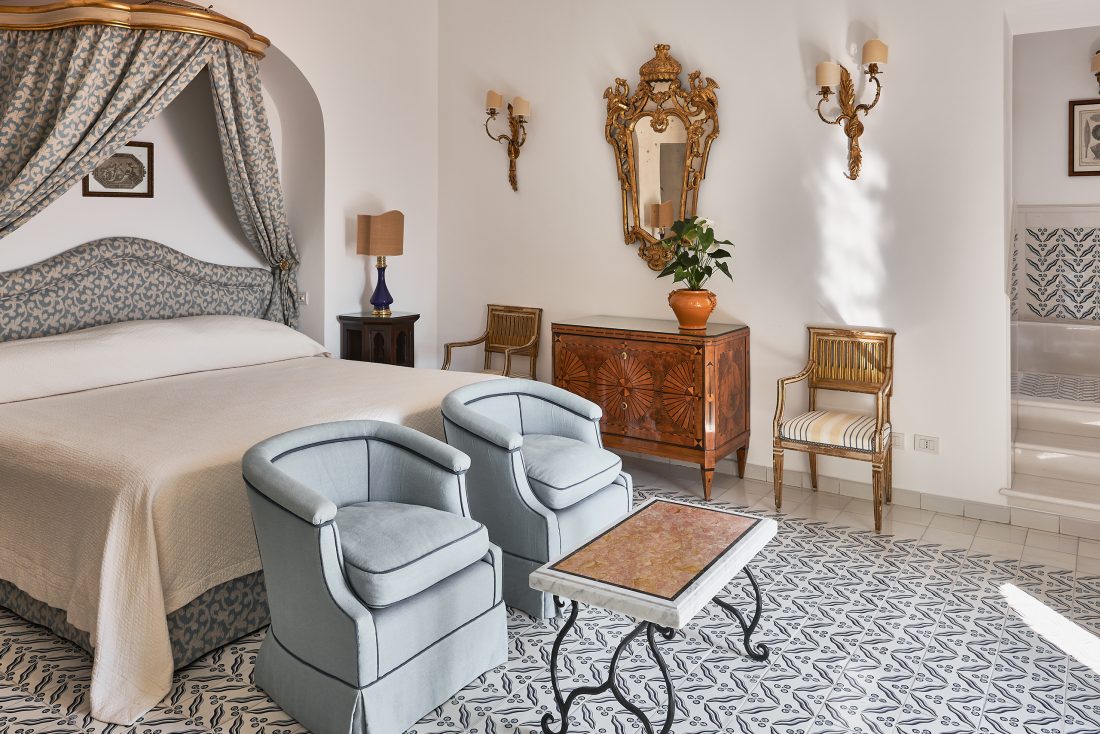
Le Sirenuse’s logo, depicting two mermaids holding the villa, symbolizes the ancient island of Sirens that inspired the hotel’s name. Inside, each of the fifty-eight rooms is unique, adorned with hand-painted Vietri tiles, antique chests of drawers, gilt mirrors, white vaulted ceilings, and terraces overlooking the Mediterranean. Curated with care by Franco Sersale, the rooms follow individual themes, such as embroidered hand fans, floral motifs, or even Pompeian influences with wallpaper prints and artifacts recalling the ancient city. This attention to detail reflects the family’s commitment to storytelling through design, where every space reveals layers of memory, culture, and artistry. Anecdotes of life within its walls abound, from the filming of Only You with Robert Downey Jr. in the early 1990s to the use of Eau d’Italie bath products, created by Marina Sersale, which now define the hotel’s bathrooms clad in white tiles, marble, and gleaming chrome.
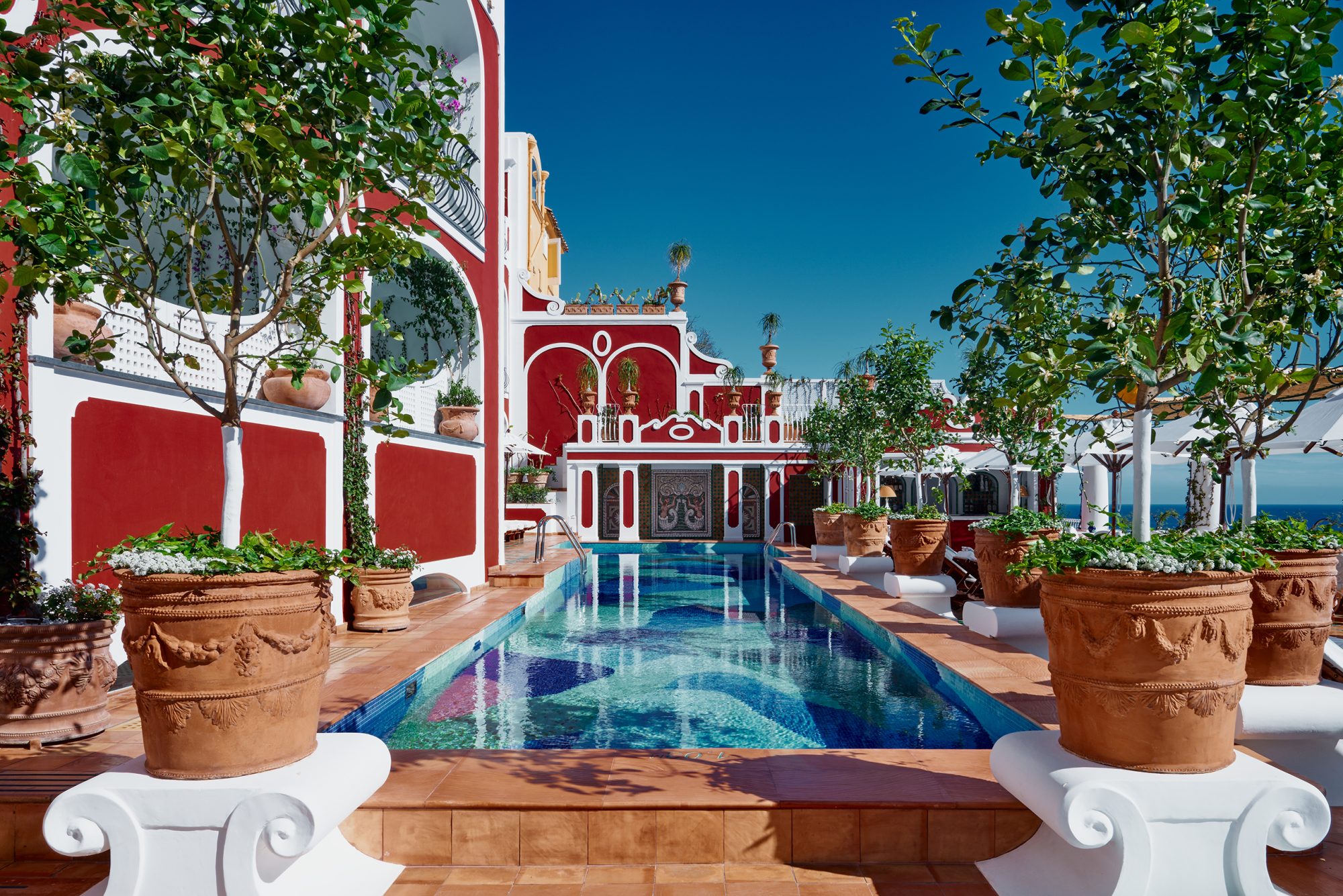
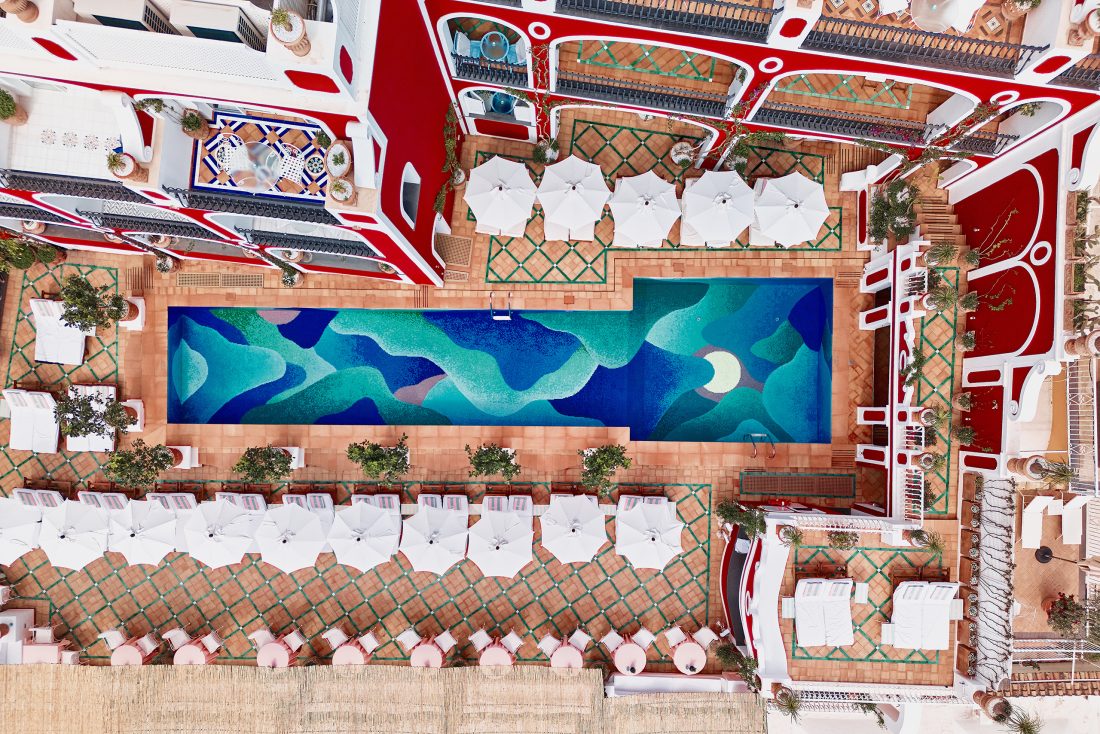
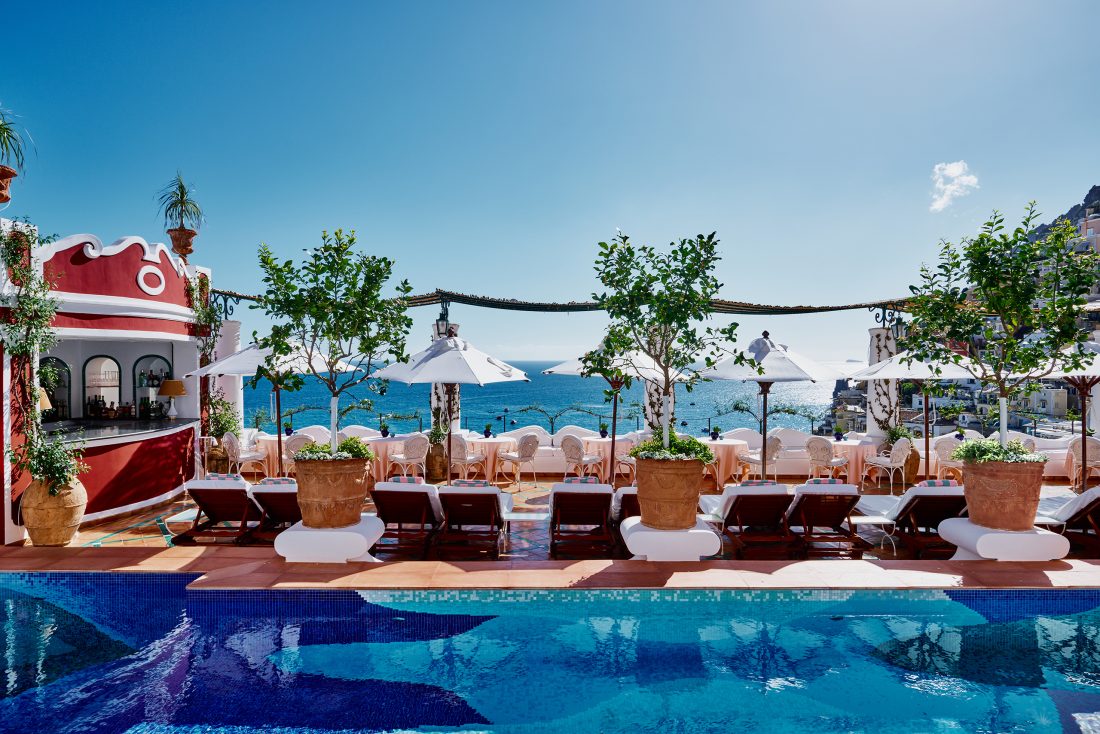
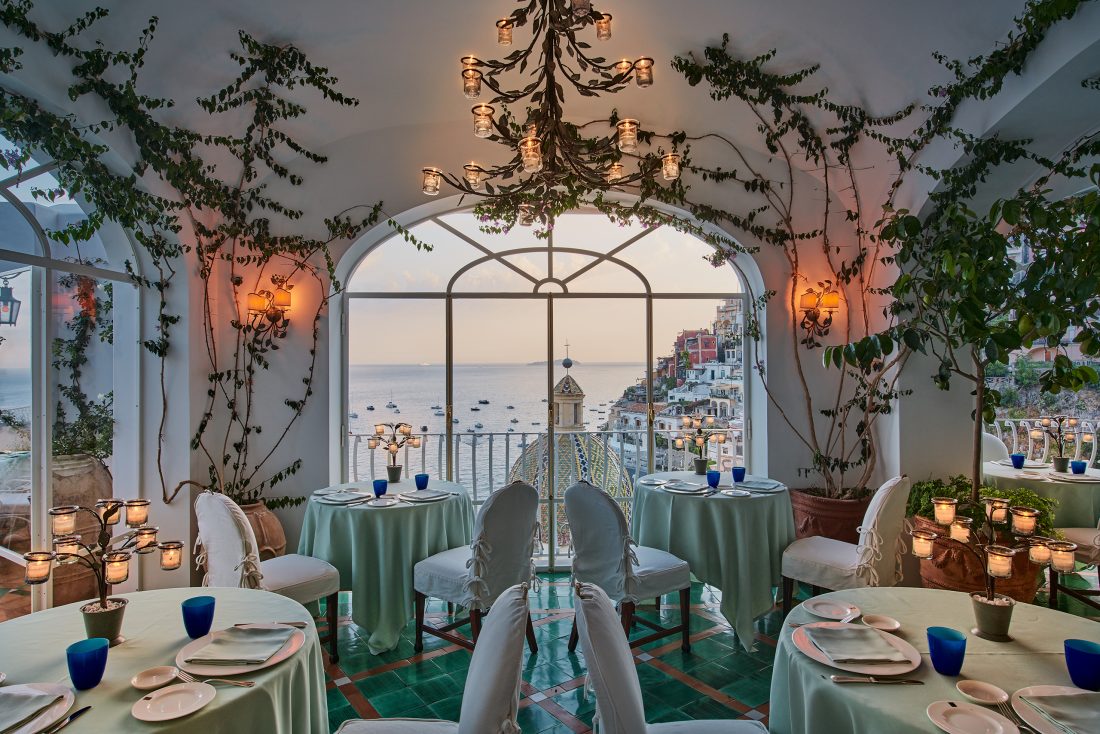
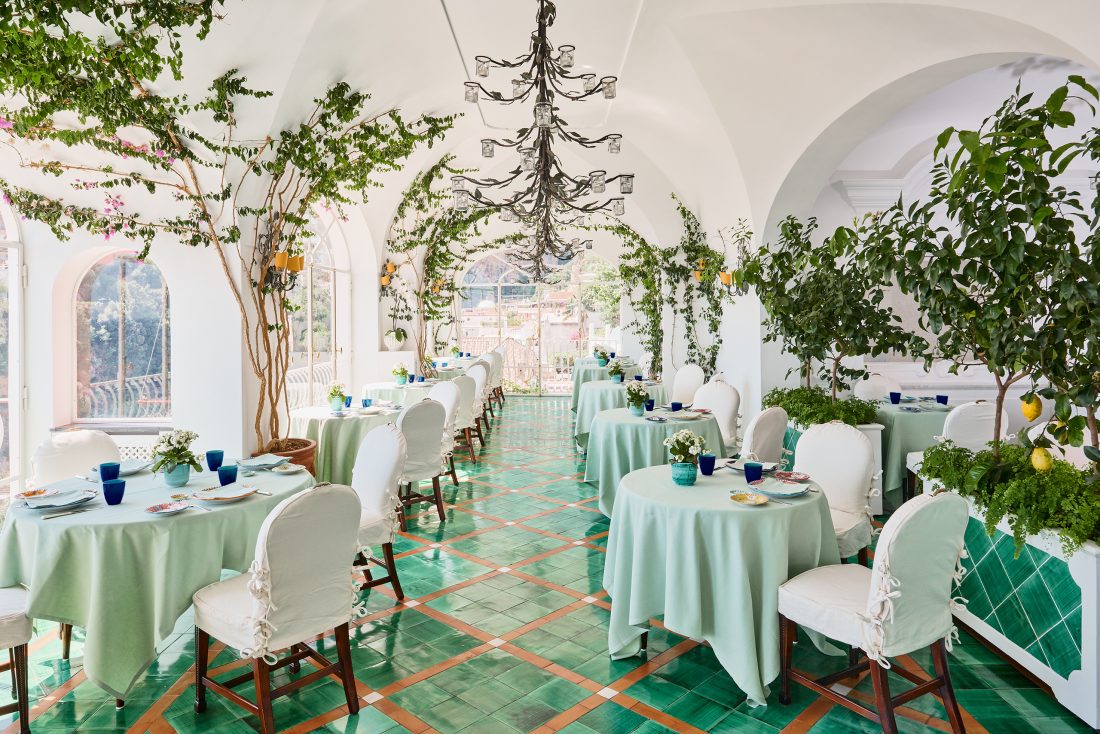
Throughout the decades, Le Sirenuse has evolved into a 58-suite luxury hotel while preserving the intimate atmosphere of a cultured private home. Much of this enduring character can be credited to Franco Sersale, whose vision brought together European antiques, Neapolitan paintings, and artisanal craftsmanship in perfect harmony, while also introducing new spaces such as the redesigned pool terrace and the panoramic La Sponda restaurant. Through his meticulous room-by-room upgrades, Franco created the refined yet soulful identity that defines Le Sirenuse today, a place where history, hospitality, and design continue to merge seamlessly.
Artists at Le Sirenuse
Franco Sersale, who for decades curated Le Sirenuse with a discerning eye, enriched the hotel with antiques, prints, and artworks sourced from around the world, carefully placing each piece to harmonize with the villa’s historic architecture and southern Italian traditions.
His commitment to beauty extended beyond collecting: he collaborated closely with artisans to design everything from floor tiles and terracotta pots to rattan chairs and marble finishes, ensuring even the smallest details embodied craftsmanship and character.
This aesthetic vision has since been carried forward by his son Antonio and daughter-in-law Carla through the Artists at Le Sirenuse programme, launched in 2015 with British curator Silka Rittson-Thomas. Contemporary works by artists such as Martin Creed, Stanley Whitney, Caragh Thuring, and Nicolas Party now find their place alongside centuries-old décor, creating a vibrant dialogue between past and present that continues to define the hotel’s unique identity.
Spa and Dolce Vitality
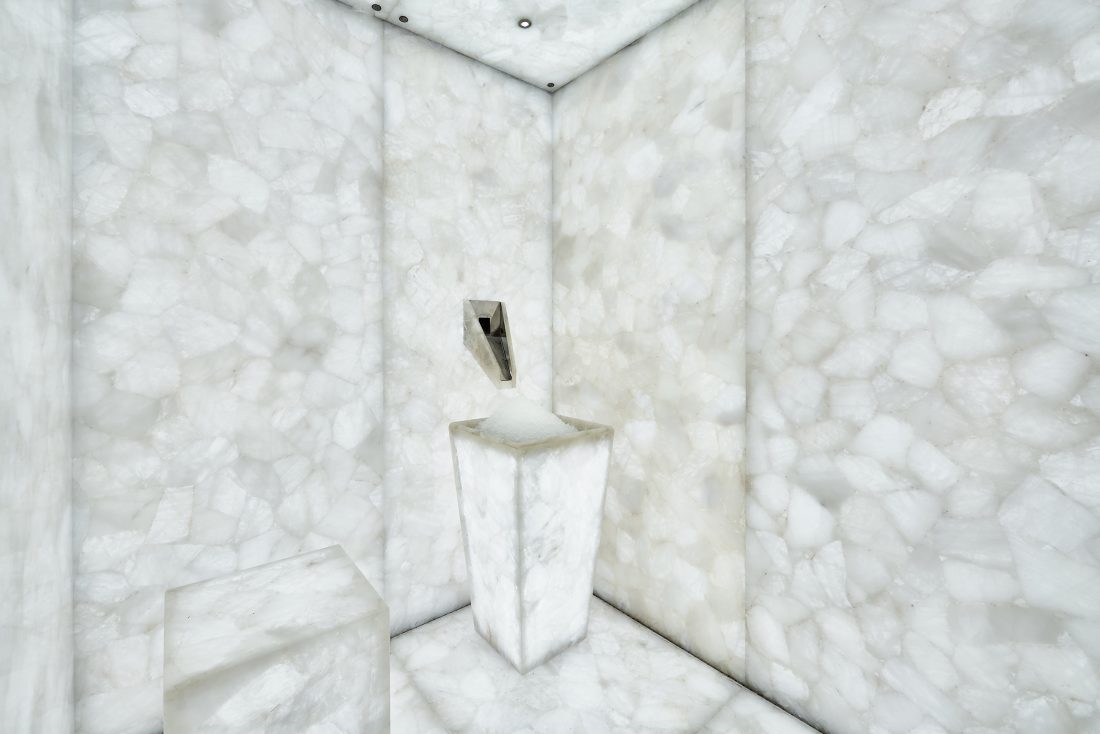
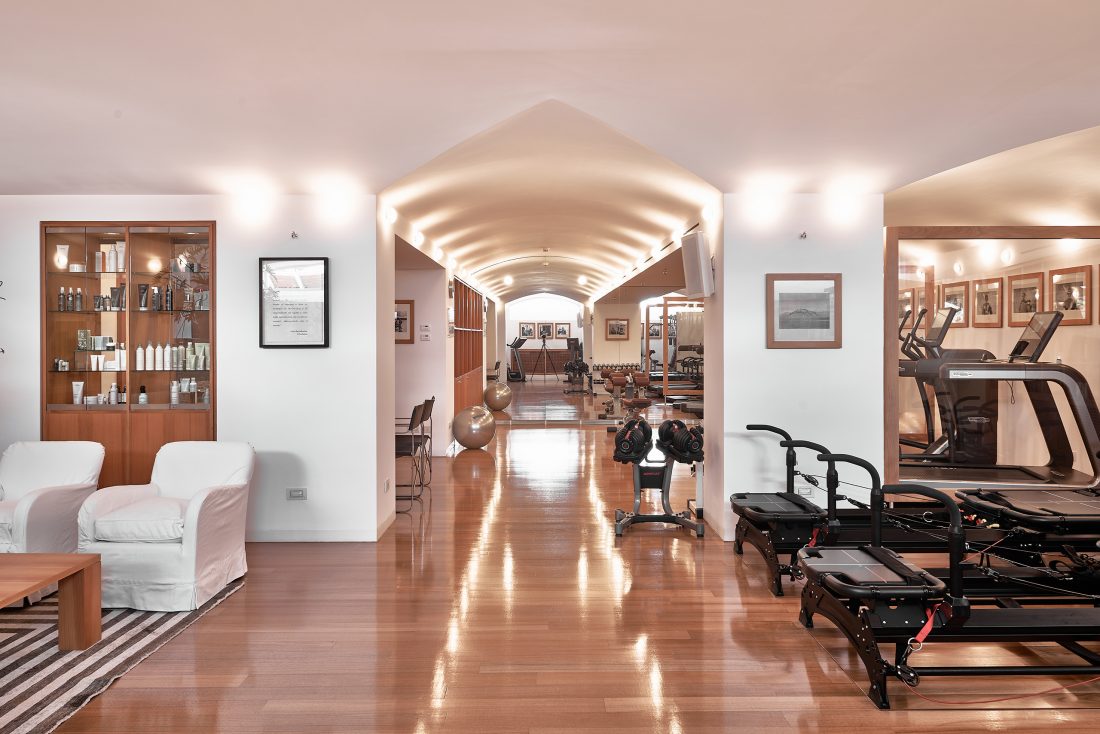
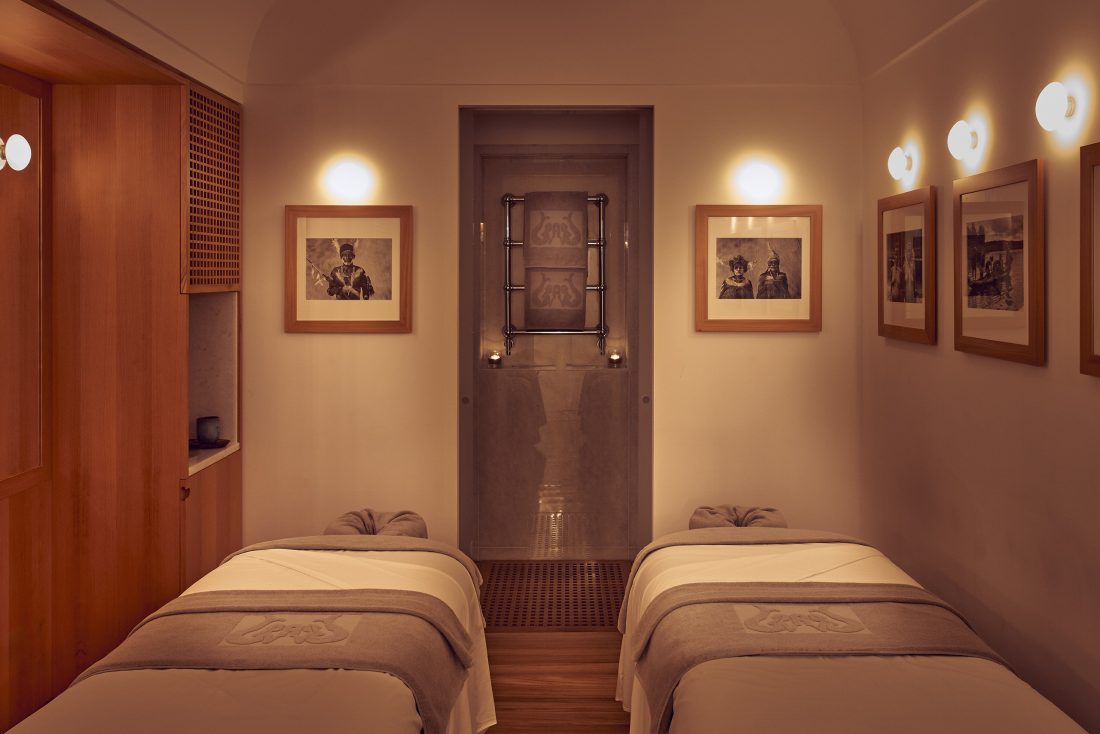
The resort has won innumerable awards and is internationally renowned for the quality of its services. The year 2000 saw the introduction of the Le Sirenuse Spa, designed by celebrated Italian architect Gae Aulenti.
In 2019 Le Sirenuse launched a health & fitness retreat called Dolce Vitality, taking place twice a year, in March and November. Dedicating the whole resort to no more than thirty participants, the six-day retreat takes advantage of the ancient network of footpaths and terrain above Positano, combining these natural workouts with yoga classes, massages, cultural experiences and a low-calorie, gluten-free pescatarian menu prepared daily from fresh local ingredients by the hotel’s executive chef, Gennaro Russo.
Additionally, throughout the season, the hotel offers weekly calendar of activities that take place in and around the hotel and are all entirely free of charge to the hotel’s guests. Among them are a wine tasting with the sommelier, a pre-breakfast pilates workout, a cocktail-mixing lesson and a short but testing trek up 1,865 steps to Nocelle, a perched village with stunning views down the coast.
Restaurants and Bars
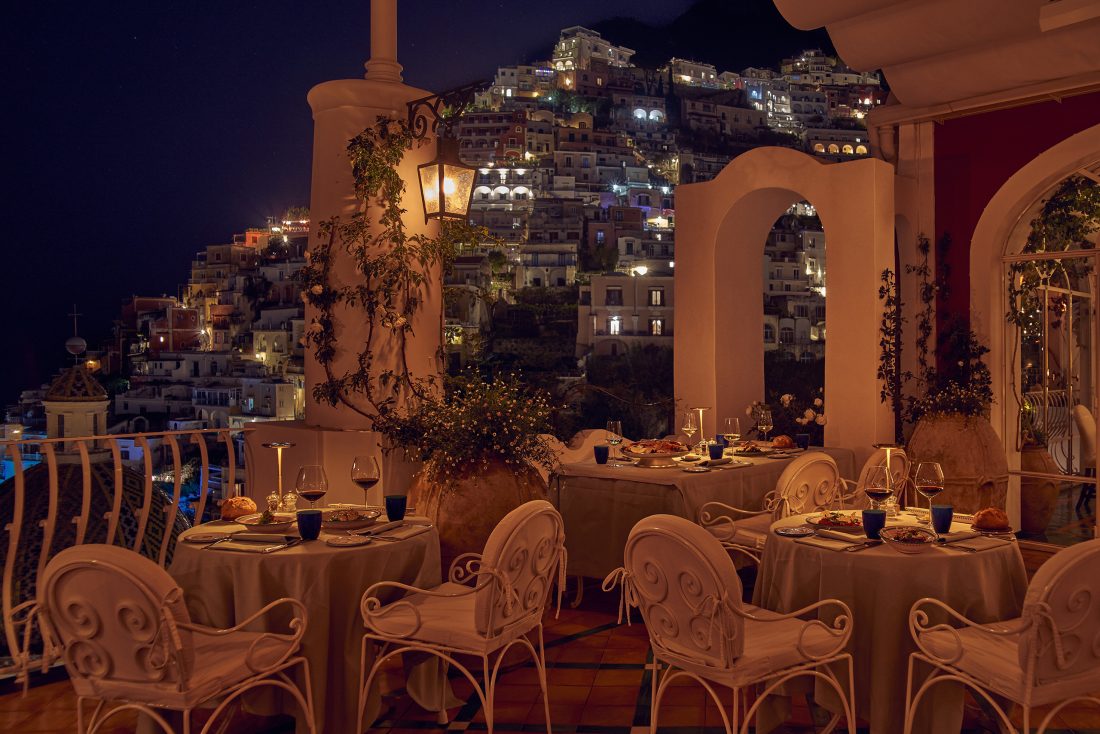
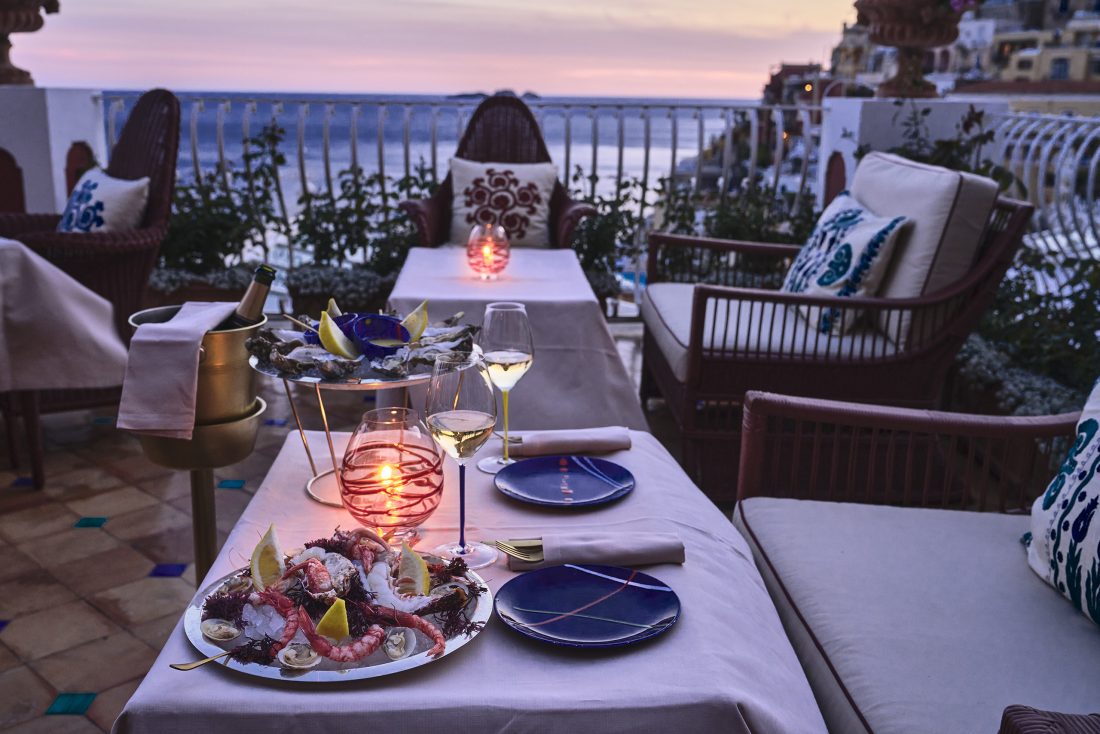
In 2001, the hotel’s romantic La Sponda restaurant, dedicated to exalting the region’s deep-rooted culinary traditions, was joined by the more informal Champagne & Oyster Bar. In 2019, this relaxed summer spot became Aldo’s, a cocktail bar and seafood grill that showcases the abundant fresh produce and classic sharing dishes of Naples and the Amalfi Coast.
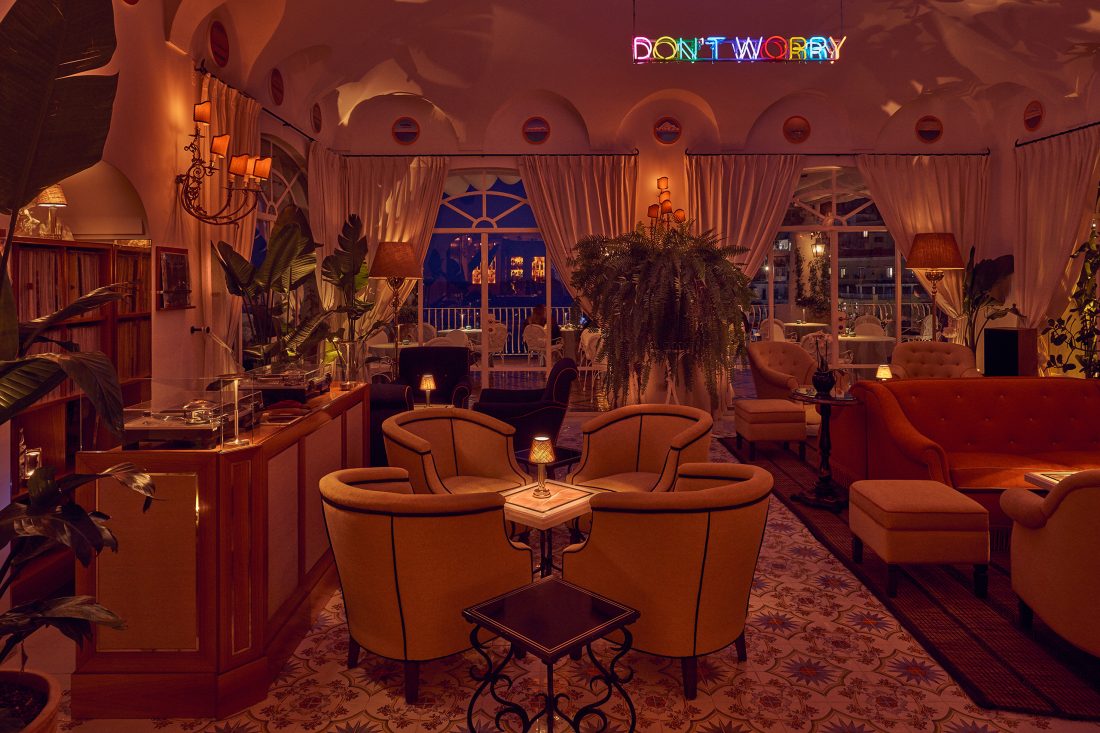
Housed in what was once part of the living room of the Sersale family villa, the hotel’s historic third-floor bar was refurbished by Rome-based architect and designer Annalisa Bellettati in time for the start of the 2021 season and rechristened the Don’t Worry Music Bar in homage to Martin Creed’s neon installation that hangs nearby. Now a discreet, intimate, and cosy after-dinner speakeasy, with a DJ spinning vinyl classics is hiding in plain sight, for true lovers of the genre.
Franco bid his final ciao to Positano in January 2015. Today he is commemorated in Franco’s Bar, a street-level evening cocktail bar that channels the generous, expansive spirit and joie de vivre of this Dolce Vita gentleman. Though closely connected to Le Sirenuse, Franco’s Bar has forged an identity of its own as the place in town for an aperitivo or nightcap with a view.
Private boat
The hotel’s close connection with the area’s maritime traditions is beautifully reflected in its private boat. A traditional gozzo or wooden fishing vessel used today for regular guest excursions, the Sant’Antonio was beloved of uncle Aldo, who would spend long hours on board exploring the coast, diving for sea urchins and entertaining his many lady friends.


